 NL
NL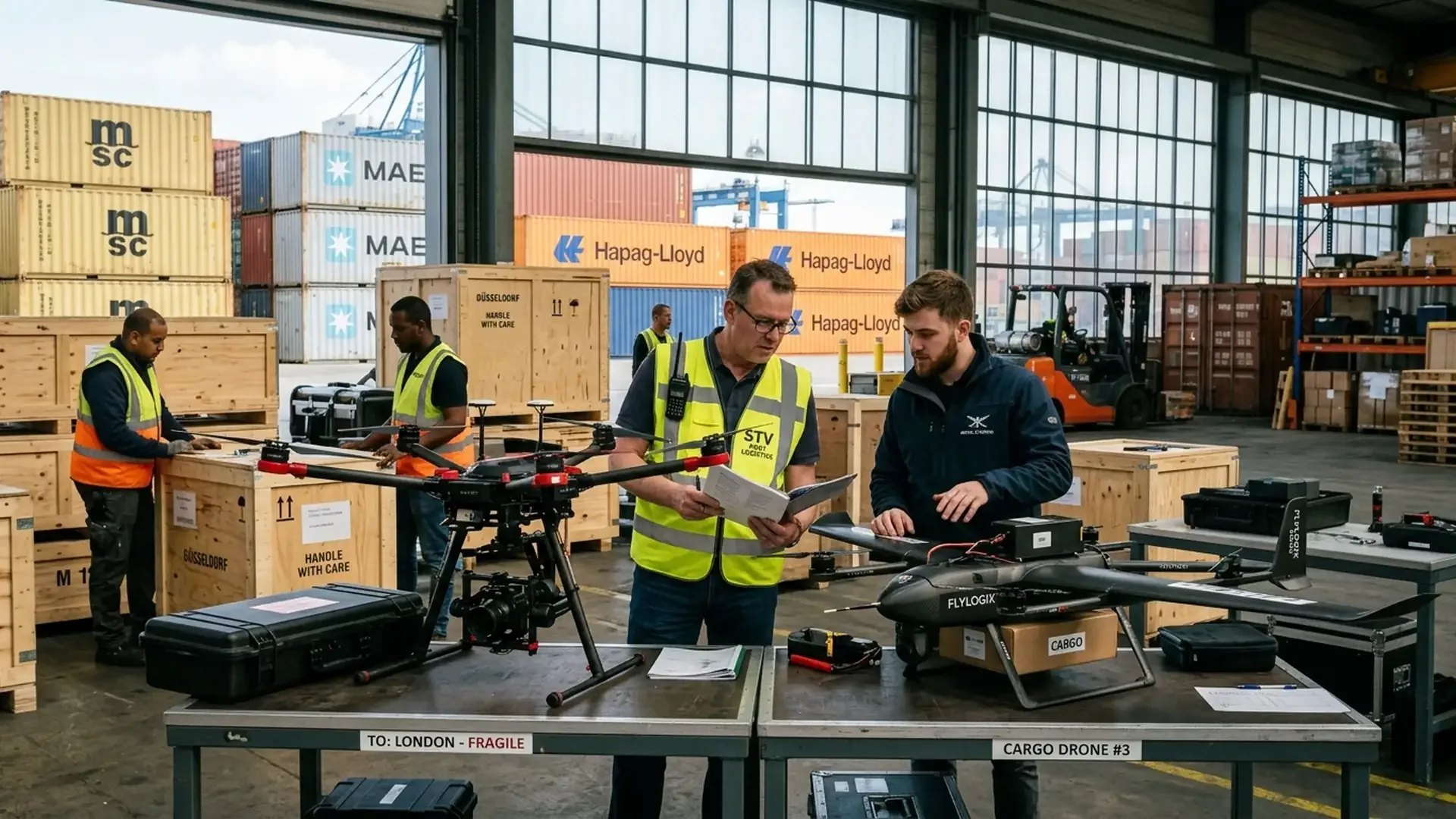
The United States government has issued a sweeping presidential proclamation introducing steep import tariffs on foreign unmanned aerial vehicles and vital drone subsystems. The newly established tariffs reach up to 100 percent for heavy-lift commercial platforms, automated docking stations, and aircraft equipped with advanced sensor payloads. This policy aims to curtail foreign supply chain dependency and aggressively foster domestic American drone manufacturing under national security directives.
The regulatory shift carries immediate ramifications across the international commercial drone ecosystem, affecting cinematography crews, industrial inspection providers, and hardware suppliers worldwide. While earlier US measures largely concentrated on restricting specific Chinese manufacturers from federal procurement programs, this broad tariff framework impacts a diverse range of hardware, avionics, and autonomous ground stations from multiple exporting nations. For European enterprises and international productions, a fundamentally new economic landscape is taking shape.
Detailed breakdown of the new US tariff structure
The tariff schedule implements a tiered duty structure determined by maximum takeoff weight (MTOW), integrated payload capabilities, and the geographic origin of manufacturing and assembly. US trade authorities draw clear distinctions between strategically sensitive commercial systems and lower-risk consumer platforms:
- 100 percent import tariff: Applied to drones with an MTOW exceeding 25 kilograms, aircraft featuring radiometric or thermal infrared imaging sensors, automated drone-in-a-box docking enclosures, and crucial powertrain components such as brushless motors, specialized ESCs, and high-density flight batteries.
- 25 percent import tariff: Applicable to standard commercial and consumer drones under 25 kilograms that lack thermal imaging equipment or sensitive dual-use flight technologies.
- Reduced preferential rates for strategic allies: Countries maintaining mutual defense and trade partnerships benefit from significantly reduced tariff thresholds, provided virtually all constituent hardware, avionics, and software originate from those partner nations or the United States:
- 15 percent tariff: European Union member states (including the Netherlands, Germany, and France), Japan, South Korea, Switzerland, Liechtenstein, and Taiwan.
- 10 percent tariff: The United Kingdom.
| Category / Application | Specifications & Capabilities | Standard Duty | EU / Allied Partner Duty |
|---|---|---|---|
| Heavy-lift commercial drones | MTOW > 25 kg, heavy cinema & industrial rigs | 100% | 15% (verified allied supply chain) |
| Thermal & infrared inspection | Thermal cameras & multi-spectral sensors | 100% | 15% (verified allied supply chain) |
| Autonomous docking stations | Drone-in-a-box & automated charging bases | 100% | 15% (verified allied supply chain) |
| Critical propulsion & avionics | Motors, speed controllers, flight batteries | 100% | 15% (verified allied supply chain) |
| Standard drones (< 25 kg) | Visual optical cameras, light broadcast craft | 25% | 15% (verified allied supply chain) |
Enforcement timeline and transition periods
The tariff schedule follows a phased implementation timeline designed to allow active freight contracts and logistics pipelines to settle. The headline 100 percent tariff on turnkey heavy-lift drones, thermal sensors, and docking systems enters into force 21 days following the proclamation signing, taking effect in early September 2026.
For modular components, flight controllers, and replacement parts not categorized as immediate supply chain security risks, a 180-day transition grace period has been granted. This window provides system integrators, distributors, and enterprise buyers time to restructure procurement routes or qualify suppliers located within nations eligible for the 15 percent preferential rate.
These actions build on regulatory steps initiated in late 2025, when the Federal Communications Commission (FCC) added foreign uncrewed aircraft and associated RF communication equipment to its Covered List, signaling an escalating federal initiative to safeguard national airspace and data infrastructure.
Impact on leading manufacturers and global supply chains
The heaviest tariffs directly impact major Asian drone producers, including market leader DJI and rival manufacturers such as Autel Robotics. While these firms have already navigated restrictions in US governmental sectors, a 100 percent tariff on heavy enterprise aircraft and thermal systems creates a substantial commercial barrier in the private US market.
Conversely, the policy creates significant market openings for European drone manufacturers. Companies such as Parrot in France, Quantum-Systems in Germany, and Dutch heavy-lift specialist Acecore Technologies manufacture high-end cinema and industrial platforms. When accompanied by documentation proving that their avionics, firmware, and critical components originate within qualifying territories, they benefit from the preferential 15 percent rate, sharpening their competitive edge in North America.
Nonetheless, proving full compliance with the strict origin mandate requires extensive supply chain auditing. Because many Western drone manufacturers historically relied on Asian suppliers for magnets, silicon chips, or lithium battery cells, establishing auditable traceability will be essential for claiming ally status.
Considerations for international drone film productions
For European cinematography crews, broadcast teams, and commercial flight specialists traveling across borders to execute projects in North America, navigating equipment transport requires heightened procedural discipline. Deploying professional cinema drones such as heavy-lift multicopters or bespoke FPV platforms across international borders demands comprehensive customs preparation.
When executing temporary filming assignments in the United States, utilizing an ATA Carnet remains paramount. This internationally recognized customs passport permits the temporary duty-free importation of professional gear, provided all registered equipment departs US soil within the specified timeframe. Working with an experienced cinema drone operator ensures that serial numbers for aircraft, controllers, batteries, and camera gimbals match carnet documentation flawlessly, preventing unexpected tariff assessments at ports of entry.
Furthermore, maintaining hardware compliance and verified software versions across platforms remains crucial. As highlighted in our recent overview of the DJI Mavic 4 Pro firmware update, staying aligned with rapid software and regulatory updates ensures uninterrupted workflow efficiency on demanding commercial sets.
Regulatory comparison: EASA vs. FAA frameworks
While the US regulatory approach through the Federal Aviation Administration (FAA) and Department of Commerce increasingly combines operational rules with trade restrictions and supply chain security, Europe takes a distinct, risk-based path under the European Union Aviation Safety Agency (EASA).
Under EASA Regulation (EU) 2019/945, uncrewed aircraft are categorized into clear C-class designations (ranging from C0 to C6) based strictly on physical weight, impact energy, geo-awareness, and direct Remote ID capabilities. Aircraft manufacturers globally can achieve CE class certification regardless of country of origin, provided their hardware satisfies rigorous technical and safety criteria. Consequently, the European market remains technically open and safety-driven, offering a predictable regulatory climate for enterprise operators.
Navigating a new era in drone industry economics
The introduction of tariffs reaching up to 100 percent by the United States marks a defining pivot in the economics of unmanned aviation. The era of frictionless international hardware procurement is giving way to a more regionalized, security-conscious market structure.
For European drone operators and technology developers, this shift underscores the value of technical excellence, robust compliance standards, and resilient supply chains. By maintaining certified aircraft fleets and adhering to rigorous operating procedures, commercial drone teams remain well equipped to deliver premier cinematography and aerial services on both sides of the Atlantic.
Frequently asked questions
Do the 100% tariffs apply to European drone manufacturers?
No. Commercial drones and components manufactured within the European Union qualify for a reduced preferential tariff of 15 percent, provided that virtually all hardware, avionics, and software components originate from the EU or allied partner countries.
Will film crews pay import duties when bringing drones to the US temporarily?
Not if they operate under an authorized ATA Carnet. An ATA Carnet allows temporary, duty-free importation of commercial film and broadcast equipment, as long as all items are re-exported upon completion of the production.
Why are thermal and infrared cameras subject to the highest 100% tariff bracket?
Thermal and infrared imaging technologies are classified as sensitive dual-use capabilities by US defense and security agencies due to their extensive use in surveillance, border security, and critical infrastructure monitoring.