 NL
NL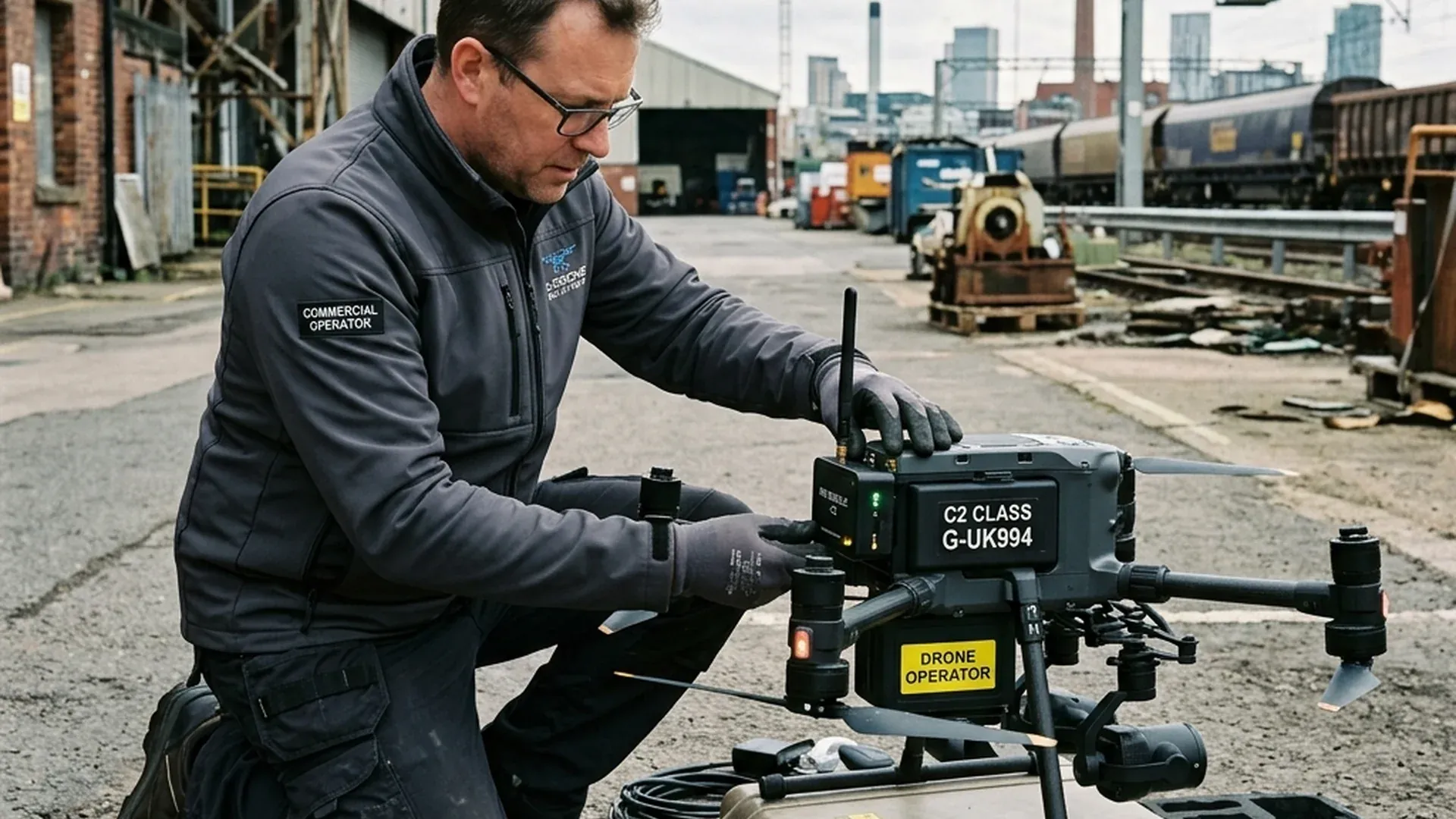
With full implementation of the European drone regulation framework (EU 2019/945 and EU 2019/947), Remote ID (Remote Identification) has fundamentally transformed uncrewed aircraft operations across Europe. Remote ID acts as a digital license plate, continuously broadcasting identification and flight telemetry data. This enables law enforcement, air traffic controllers, and the public to identify operators and verify drone positions in real time.
In daily practice, Remote ID compliance raises practical questions among both recreational pilots and commercial enterprise operators. Which drones with C-class markings (C1, C2, C3) feature factory-integrated Remote ID? How does Direct Remote ID (DRI) compare to Network Remote ID (NRI) in U-space airspace? This article examines practical compliance requirements and technical setup procedures.
Direct Remote ID vs Network Remote ID: Technical Distinctions
Under regulations established by the EASA (European Union Aviation Safety Agency), remote identification is divided into two primary broadcast methodologies: Direct Remote ID (DRI) and Network Remote ID (NRI):
- Direct Remote ID (DRI): A localized RF signal (typically via Wi-Fi Beacon or Bluetooth Legacy/Long Range) broadcast directly from the drone. Nearby smartphones or specialized receivers within radius can intercept the signal. DRI is mandatory for C1, C2, and C3 class drones operating in Open and Specific categories.
- Network Remote ID (NRI): A cellular-based telemetry stream (via 4G or 5G networks) sent to central cloud servers or U-space Service Providers (USSPs). NRI forms part of the U-space ecosystem, enabling automated traffic deconfliction and long-range BVLOS operations.
For Direct Remote ID, the aircraft broadcasts the following standardized data packet at least once per second:
- The owner's unique Operator Registration Number (Operator ID) as assigned by national aviation authorities (such as the RDW in the Netherlands), excluding secret 3-digit PIN codes.
- The drone's unique ANSI/CTA-2063-A Serial Number.
- Real-time GNSS Position (latitude, longitude, and barometric/geometrical altitude).
- Flight dynamics including Heading, Ground Speed, and vertical rate.
- Real-time Remote Pilot Location (or takeoff point if pilot location tracking is unequipped).
Class Markings and Mandatory Requirements per Category
Remote ID obligations depend directly on aircraft weight, class identification markings, and operational category. Drones bearing C1, C2, or C3 class labels are factory-equipped with integrated Direct Remote ID hardware. C0 class drones (under 250 grams) are exempt from Remote ID in the Open category, unless deployed under Specific category operational permits.
| Class Marking / Category | MTOM Weight Class | Remote ID Requirement | Compliance Solution |
|---|---|---|---|
| C0 Label (Open A1) | < 250 grams | Exempt (Open category) | No Remote ID required |
| C1 Label (Open A1) | < 900 grams | Mandatory (Direct Remote ID) | Factory-integrated (DRI) |
| C2 Label (Open A2) | < 4 kg | Mandatory (Direct Remote ID) | Factory-integrated (DRI) |
| C3 Label (Open A3) | < 25 kg | Mandatory (Direct Remote ID) | Factory-integrated (DRI) |
| Legacy Drones (> 250g) | 250g - 25kg (Unlabeled) | Mandatory (Open A3 & Specific) | Attach standalone Remote ID module |
| Specific Category | All weights / SORA / PDRA | Mandatory (DRI & NRI where applicable) | Integrated or certified Add-on module |
Solutions for Legacy Fleet Aircraft: Standalone Remote ID Modules
For older commercial aircraft purchased prior to January 1, 2024 without class markings (legacy drones), installing an external add-on Remote ID transmitter module is mandatory if the aircraft exceeds 250 grams and operates in Open A3 or Specific category operations.
Avionics manufacturers (including Droniq and AirHub partners) supply compact standalone Remote ID modules powered independently or via drone battery taps. These lightweight modules integrate onboard GNSS receivers and RF transmitters. Operators configure their national Operator ID via mobile application, ensuring immediate compliance with EASA standards.
Remote ID Integration in Future U-space Airspace
The U-space architecture represents Europe's digital uncrewed traffic management framework designed for dense urban and industrial airspace. Within designated U-space airspace volumes, Network Remote ID (NRI) becomes a mandatory service requirement.
Through certified software providers (such as AirHub and Droniq), aircraft maintain active cellular telemetry connections to U-space Service Providers (USSPs). This automated infrastructure manages real-time tactical deconfliction between commercial drones, emergency services, and automated transport corridors.
At Drone Department, our licensed drone pilots ensure total regulatory compliance and Remote ID integration across all commercial missions. Whether operating high-end cinema drones or conducting flights in controlled airspace, our commitment to regulatory compliance and safety management guarantees seamless project execution.
Enforcement by Aviation Authorities and Inspectorates
Aviation authorities, including the Human Environment and Transport Inspectorate (ILT) and law enforcement agencies across Europe, enforce Remote ID compliance using mobile scanner applications and dedicated receivers. Inspectors can instantly capture operator registration data from airborne drones. Operating without active Remote ID broadcasting or using incorrect registration numbers can result in financial penalties or suspension of operational permits.
Preparing Commercial Drone Fleets for Digital Airspace Integration
Remote ID represents more than a compliance obligation; it forms the foundation of a safe, transparent, and digitally integrated European airspace. Ensuring aircraft flight control software is updated with correct Operator ID configurations prevents operational delays and regulatory infractions.
For commercial clients, partnering with an established operator like Drone Department provides complete assurance that every flight complies fully with EASA regulations, national registry requirements, and U-space protocols.
Frequently Asked Questions About Remote ID
What is the difference between an Operator ID and a Remote Pilot Certificate?
The Operator ID belongs to the drone owner/organization and must be configured in the drone's Remote ID broadcast settings. The Remote Pilot Certificate proves pilot competency and is not broadcast via Remote ID.
Does my DJI Mini 2 or Mini 3/4 (under 250g) require Remote ID?
When operating in the Open A1 category under 250 grams, Remote ID is not mandatory by law. However, if deployed under a Specific category operational authorization, Remote ID may be required by permit conditions.
Where do I input my Operator ID in DJI drones?
For drones with integrated Remote ID (such as the DJI Mavic 3 series, Inspire 3, or Matrice 300/350), enter your Operator ID in the flight app settings (DJI Fly or DJI Pilot) under 'Remote ID'.
Does Remote ID broadcast my personal private information?
No, the public RF broadcast includes only your Operator ID and flight telemetry data. Only authorized law enforcement and aviation inspectorates can cross-reference Operator IDs in national databases.
What are the consequences of flying with an incorrect Operator ID?
Broadcasting an invalid or incorrect Operator ID legally constitutes flying without mandatory remote identification, which can result in official citations and fines from aviation authorities.