 NL
NL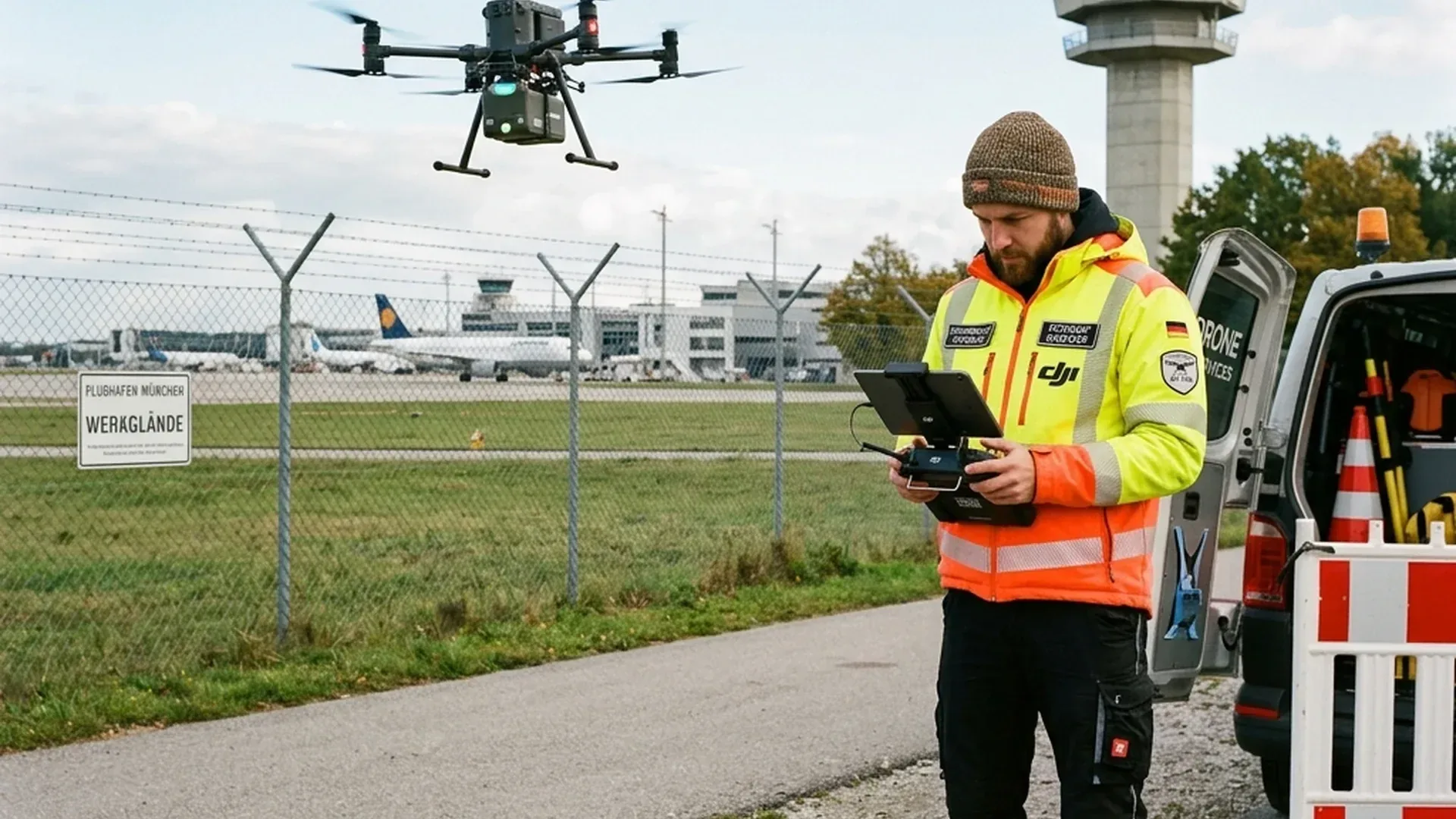
Executing commercial and professional drone operations within controlled airspace surrounding international and regional airports has historically been one of the most complex regulatory challenges for drone pilots in Europe. Effective August 6, 2026, Germany is implementing major policy revisions that significantly streamline drone flights inside Control Zones (CTRs). German aviation authorities aim to reduce administrative burdens and make project planning for industrial inspections, aerial filming, and surveying near airports far more predictable.
Until now, drone operators required individual air traffic control clearances for virtually every flight inside a German CTR. Under the new procedure, an automatic general clearance applies in the outer geographic rings of control zones. As long as pilots adhere to specified maximum flight altitudes and operational guidelines, individual permission from the control tower is no longer required.
Introduction of Four Geographic Zones in German CTRs
The core of the new German regulatory framework is the division of each CTR into four concentric geographic zones. This zoned structure balances risks to manned aviation (such as departing and arriving airliner traffic) against the operational demands of commercial drone enterprises.
In the innermost zone (Zone 1), located immediately surrounding runways and flight paths, individual clearance from air traffic control remains strictly mandatory due to high collision risks. In the outer three zones (Zones 2, 3, and 4), a general air traffic control clearance applies automatically based on pre-defined altitude ceilings.
Specific Altitude Ceilings and Object Inspection Allowance
The allowable maximum flight altitudes increase progressively with distance from the airport perimeter, maintaining proper vertical and horizontal separation between manned aircraft and uncrewed aerial systems:
- Zone 1 (Innermost Zone): Individual air traffic control approval is strictly required regardless of altitude.
- Zone 2: Flights automatically permitted up to a maximum altitude of 25 meters above ground level (AGL).
- Zone 3: Flights automatically permitted up to a maximum altitude of 45 meters AGL.
- Zone 4 (Outermost Zone): Flights automatically permitted up to 100 meters AGL in most controlled areas.
- Object Inspection Extension: When inspecting high structures (such as wind turbines, bridges, power line pylons, or industrial buildings), drones may fly higher than the zone altitude ceiling, provided the aircraft remains within 30 meters horizontally and 15 meters vertically of the structure.
| CTR Zone | Distance to Airport Perimeter | Max Altitude (General Clearance) | Required Authorization |
|---|---|---|---|
| Zone 1 | Immediate runway vicinity | 0 meters (No free flight) | Individual ATC clearance mandatory |
| Zone 2 | Inner perimeter surrounding Zone 1 | 25 meters AGL | Automatically allowed under conditions |
| Zone 3 | Mid-tier CTR sector | 45 meters AGL | Automatically allowed under conditions |
| Zone 4 | Outer CTR boundary | 100 meters AGL | Automatically allowed under conditions |
| Object Inspection | Within 30m of structure | Structure height + 15 meters vertical | Exempted when close to structure |
DIPUL as Central Digital Portal for Airspace Clearances
Alongside the relaxed altitude rules, the German Federal Ministry for Digital and Transport operates the central portal DIPUL. This digital platform serves as the single point of access for all drone airspace information across Germany. Pilots can inspect an interactive map to see exact CTR boundaries, active zones, and height limits for any planned location.
If an operation requires individual authorization (for instance in Zone 1 or above standard altitude limits), the application is routed through DIPUL directly to the responsible air traffic control provider, such as DFS Deutsche Flugsicherung. This eliminates fragmented regional application procedures across different airports.
Applicability to VLOS, BVLOS, and Swarm Operations
Notably, the general clearance in outer CTR zones is not restricted to Visual Line of Sight (VLOS) flights. Under defined operational conditions, Beyond Visual Line of Sight (BVLOS) operations and drone swarm missions can also take advantage of the simplified rules in outer zones.
However, aviation authorities emphasize that the remote pilot retains full responsibility for conflict avoidance with manned aircraft. Air traffic control towers do not provide active traffic information to drones operating under general clearance in outer zones. Manned aircraft maintain right-of-way at all times. Operators must hold valid operational authorizations and risk assessments aligned with European regulations set by the EASA (European Union Aviation Safety Agency).
Comparison with Dutch Airspace Integration and European Trends
In the Netherlands, aviation stakeholders including LVNL (Luchtverkeersleiding Nederland) and the Human Environment and Transport Inspectorate (ILT) have been working toward opening CTR airspace for Open category and light Specific category drone operations. However, full implementation in Dutch CTRs has experienced delays due to airspace complexity.
For professional drone operators executing cross-border European missions, operating with certified teams and robust safety protocols remains vital. At Drone Department, our licensed drone pilots hold extensive operational permits to execute complex shoots safely. Whether operating high-end cinema drones or managing flight permits in controlled airspace, our commitment to regulatory compliance and safety management guarantees seamless production execution.
Future Outlook for Commercial Drone Operations in European Airport Zones
Germany's implementation of the 4-zone CTR model and the digital DIPUL portal sets a precedent for European airspace integration under EASA guidelines. Removing administrative hurdles for low-altitude operations in outer CTR sectors unlocks significant potential for industrial inspections, geospatial mapping, and high-end aerial cinematography.
As U-Space services and automated traffic management systems continue to mature across Europe, seamless integration of commercial uncrewed systems into controlled airspace will become standard practice across all EU member states in the coming years.
Frequently Asked Questions About CTR Drone Operations
When do the new CTR rules in Germany take effect?
The new 4-zone CTR procedures officially take effect in Germany on August 6, 2026.
Do I need individual permission to fly in Zones 2, 3, or 4 of a German CTR?
No, as long as you stay within the specified altitude limits (25m in Zone 2, 45m in Zone 3, and 100m in Zone 4) and comply with general conditions, automatic general clearance applies.
What is the DIPUL portal?
DIPUL (Digital Platform for Uncrewed Aviation) is Germany's official portal for accessing digital airspace maps, geographic zones, and submitting digital clearance requests.
Are there special rules for inspecting tall structures near airports?
Yes, for structure inspections, drones may fly up to 15 meters above the object's height, provided the aircraft stays within 30 meters horizontally of the structure.
Are CTR rules in the Netherlands also relaxed?
In the Netherlands, flying in CTRs under the Open category remains restricted without explicit operational permits from LVNL and ILT. Relaxed Dutch CTR rules are still under evaluation.